In fastening systems, small components can have a big impact on performance. Washers are one of them, quietly distributing load, protecting surfaces, and supporting stability.
But they are not interchangeable. Flat washers, lock washers, and fender washers are each designed for different conditions, from general load distribution to vibration resistance and support for thin materials.
Choosing the right washer can help improve performance, reduce wear, and prevent avoidable fastening issues over time.
What Is a Washer and Why Does It Matter?
A washer is a thin component placed between a fastener and the surface it secures. While it may look simple, it serves an important purpose in many assemblies.
Washers are commonly used to:
- Distribute load across a wider surface
- Help protect the material underneath the fastener
- Improve stability in the joint
- Reduce the risk of loosening in certain applications
In practical terms, washers act as an interface between the fastener and the material, helping ensure that force is transferred efficiently without compromising the integrity of either surface.
Flat Washers: For Load Distribution and Surface Protection
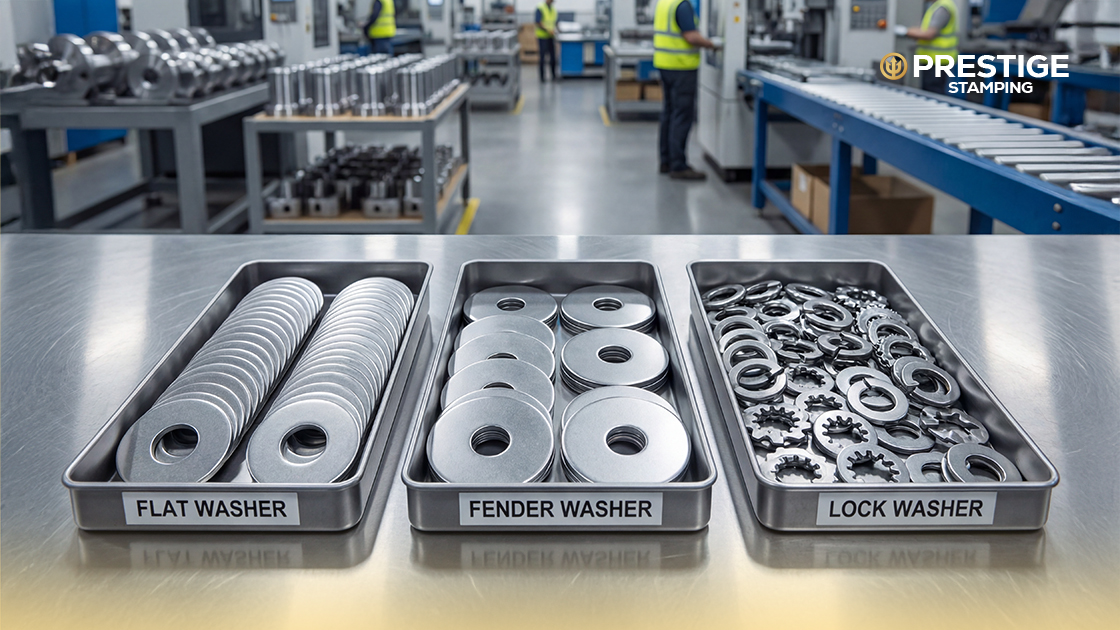
Flat washers are the most widely used type and serve as the baseline in most fastening systems. Their primary function is to increase the bearing surface area of a fastener, reducing compressive stress on the material beneath.
By distributing clamping force more evenly, flat washers help prevent surface deformation and improve overall joint integrity.
Used In
- General manufacturing and assembly
- Construction applications
- Installations where even load distribution is needed
Quick Note
Ensure the washer’s inner and outer diameters align with the fastener and clearance hole. Improper sizing can lead to deformation or “cupping” under high torque.
Lock Washers: For Applications Exposed to Vibration
In environments where vibration or dynamic loads are present, maintaining fastener tension becomes critical. Lock washers are designed to reduce the likelihood of loosening by introducing additional friction or spring force into the joint.
Rather than distributing load, their function is to preserve clamping force under movement.
Common Types
- Split (helical) washers, which apply spring tension
- Internal or external tooth washers, which create a mechanical grip on the surface
Used In
- Automotive systems and engines
- Industrial machinery
- Equipment exposed to continuous vibration or shifting loads
Quick Note
Toothed lock washers can mark or damage surface finishes. They should be used where maintaining tension is more important than preserving surface appearance.
Fender Washers: For Increasing Surface Coverage
Fender washers are designed for applications where standard washers do not provide sufficient support. Their larger outer diameter significantly increases the bearing surface area, making them ideal for thin or soft materials.
This added surface area helps distribute load more effectively and prevents fasteners from pulling through the material.
Used In
- Sheet metal and panel applications
- Thin plastics or soft substrates
- Repair work involving oversized or worn holes
Quick note
Fender washers are often thinner than standard washers, so they should still be reviewed against the load requirements of the job.
Comparison Matrix: At a Glance
| Washer Type | Primary Goal | Key Use Case | Benefit |
| Flat | Load Distribution | General Assembly | Prevents surface damage |
| Lock | Tension/Friction | High-Vibration | Prevents loosening |
| Fender | Surface Coverage | Thin/Soft Materials | Prevents pull-through |
Selecting the Right Washer for the Application
When choosing between washer types, start with the function you need the washer to perform.
- Choose a flat washer when you need even load distribution and surface protection.
- Choose a lock washer when vibration may cause the fastener to loosen.
- Choose a fender washer when working with thin materials or when extra surface coverage is needed.
In some assemblies, washers may also be paired with other fastening components to improve overall performance.
Where These Washers Are Commonly Used
Washers are used across a wide range of industries, with each type serving a specific function based on application requirements.
- Flat washers are commonly used in construction, automotive assemblies, and general manufacturing, where consistent load distribution is needed.
- Lock washers are widely used in machinery, engines, and equipment exposed to vibration, where keeping the fastener secure over time is important.
- Fender washers are frequently used in sheet metal work, automotive body panels, plumbing systems, and repair scenarios involving thin or weakened materials.
Understanding these use cases helps ensure the correct washer is selected for both performance and longevity.
In high-volume manufacturing environments, selecting the correct washer type also contributes to process consistency, reducing variability and improving assembly reliability at scale.
Materials Used in Washers
Performance is influenced not only by washer design but also by material selection. Different environments require different material properties.
- Carbon Steel: High strength and durability for general industrial applications
- Stainless Steel: Corrosion resistance for outdoor, marine, or chemical environments
- Aluminum: Lightweight and corrosion-resistant for weight-sensitive applications
- Brass: Suitable for applications requiring conductivity and corrosion resistance
Material selection should align with both mechanical load requirements and environmental exposure. Factors such as temperature variation, moisture, and chemical contact can significantly affect long-term performance.
Selecting the appropriate material ensures that washers perform reliably under specific environmental and mechanical conditions.
Why Washer Selection Matters
Washer selection affects more than fit. It can also influence how well the full assembly performs over time.
Using the wrong washer can lead to issues such as:
- uneven load distribution
- surface damage
- reduced fastener stability
- premature wear in the assembly
Choosing the correct washer helps support long-term performance and a more reliable result.
Final Thoughts
Flat washers, lock washers, and fender washers each serve a distinct engineering purpose. Understanding how they function and where they are most effective allows for more precise and reliable fastening solutions.
In high-performance systems, attention to these small components is not optional. It is essential.
Still unsure which washer fits your project? Get expert advice from Prestige Stamping.